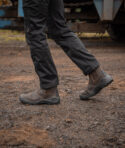
There is no single replacement date that applies to every pair of safety boots. How long they last depends on how often they are worn, the conditions they face and how well they are maintained.
Safety boots should be replaced when wear or damage means they may no longer provide dependable protection, grip, support or comfort. A heavily used pair may need replaced much sooner than boots worn only occasionally.
HOW LONG SHOULD SAFETY BOOTS LAST?
There is no guaranteed lifespan for safety footwear. Two people wearing the same boots can experience very different levels of wear depending on their work.
Daily use on farms, building sites, concrete floors or uneven ground will normally wear footwear more quickly than occasional use in a cleaner and drier environment.
The materials, fit, storage and care of the boots will also affect how long they remain serviceable. The important question is not simply how old the boots are, but whether they are still in suitable condition for the job.
WHAT AFFECTS THE LIFESPAN OF SAFETY BOOTS?
Safety boots can wear at different rates depending on:
How many hours they are worn each day
The surfaces and ground conditions involved
Regular exposure to water, mud, oils or chemicals
The amount of bending, climbing or kneeling required
Whether the boots are cleaned and dried correctly
How well the boots fit the wearer
Whether the footwear has experienced an impact or puncture
Someone regularly walking across concrete, climbing ladders or working in wet agricultural conditions may place considerably more stress on their footwear than someone working mainly indoors.
WHAT ARE THE SIGNS THAT SAFETY BOOTS NEED REPLACED?
Inspect your safety boots regularly and look for changes that could affect their protection, grip or fit.
1. The outsole tread is badly worn
Worn or smooth tread can reduce grip, particularly on wet, muddy or contaminated surfaces. The Health and Safety Executive advises having a system for checking and replacing footwear before it becomes worn and dangerous.
2. The sole is splitting or separating
Replace boots if the sole is separating from the upper or if deep cracks have developed. Damage in this area can allow water and debris to enter and may affect the stability of the footwear.
3. The upper is cracked, torn or badly worn
Small surface marks are expected during normal use, but deep cracks, holes, failed stitching or exposed internal materials can indicate that the boot is no longer in serviceable condition.
4. The toe area has suffered a serious impact
If a heavy object has struck the protective toe area, stop using the footwear and have it assessed or replaced. Damage to protective components may not always be obvious from the outside.
5. The midsole may have been punctured
Footwear should be replaced following a puncture or suspected damage to its penetration-resistant insert. Do not continue relying on damaged footwear for underfoot protection.
6. The boots no longer fit securely
Compressed cushioning, damaged fastenings and stretched materials can change how the boots fit. Excessive movement inside the footwear may reduce stability and make long working days uncomfortable.
7. The boots are allowing water inside
Water entering through cracked leather, failed seams or a damaged membrane can indicate that the footwear has deteriorated. This is particularly important when waterproof performance is required for the job.
SHOULD SAFETY BOOTS BE REPLACED AFTER AN IMPACT?
Safety boots should be replaced if they have experienced a serious impact, compression event or puncture that may have damaged a protective component.
A toe cap or protective midsole can be compromised even when the damage is not immediately visible. Continuing to wear the boots could mean relying on protection that is no longer dependable.
If you are unsure, stop using the footwear and follow your employer’s safety procedure or contact the manufacturer for guidance.
CAN DAMAGED SAFETY BOOTS BE REPAIRED?
Simple maintenance, such as replacing damaged laces with suitable replacements, may be possible. However, repairs should not be used to restore damaged safety components.
A split sole, damaged toe area, punctured midsole or badly deteriorated upper generally means the footwear should be replaced. An improvised repair does not restore the original certification or guarantee the same level of protection.
HOW OFTEN SHOULD SAFETY BOOTS BE CHECKED?
Give your footwear a quick visual check before wearing it. Look at the tread, sole, upper, stitching and fastening system, and check for any obvious change in fit or comfort.
A more thorough inspection should be carried out regularly, particularly when the boots are used daily or exposed to demanding conditions.
HOW CAN YOU MAKE SAFETY BOOTS LAST LONGER?
Good care will not make damaged footwear safe again, but it can help a serviceable pair last longer.
Remove mud and dirt after use
Allow wet boots to dry naturally
Keep footwear away from radiators and direct heat
Use suitable care products for the upper material
Clean debris from the outsole tread
Replace worn or damaged laces promptly
Store boots in a clean, dry and ventilated area
Follow the care instructions supplied with the footwear
Regular cleaning also makes it easier to see developing cracks, failed stitching and other damage that may be hidden by mud.
WHO IS RESPONSIBLE FOR REPLACING SAFETY FOOTWEAR?
Where an employer provides safety footwear as personal protective equipment, the employer is responsible for its maintenance and replacement.
Workers should use the footwear correctly, look after it and report loss, damage or defects. Always follow the footwear requirements and replacement process for your workplace.
CHOOSING YOUR REPLACEMENT SAFETY BOOTS
Your replacement footwear should match the hazards and working conditions involved. Do not assume that every safety boot provides the same protection.
Consider:
The safety classification required for your work
Whether toe and underfoot protection are needed
Waterproof or water-resistant performance
Slip resistance and the surfaces you work on
The correct fit and level of ankle support
Whether you need features such as ladder grip or cold insulation
Our guide to safety boot ratings explains the main classifications and helps you understand the protection available.
SHOP XPERT SAFETY FOOTWEAR
FREQUENTLY ASKED QUESTIONS
Do safety boots have to be replaced every six months?
No fixed six-month replacement rule applies to every pair. Replacement should be based on condition, usage, workplace requirements and the manufacturer’s instructions. Boots used heavily may need replaced sooner.
Can I continue wearing safety boots with worn tread?
Safety boots should be replaced when the tread is so worn that it may no longer provide dependable grip. Do not wait until the outsole is completely smooth.
Should safety boots be replaced after something heavy lands on them?
Yes, where the impact may have damaged the toe cap or surrounding construction. Protective damage may not always be visible from the outside.
Can the sole of a safety boot be repaired?
A repair should not be relied upon to restore damaged protective components or the original certification. If the sole is separating, badly cracked or punctured, replace the footwear.
How should safety boots be stored?
Store them in a clean, dry and ventilated area away from direct heat, strong sunlight and substances that could damage the materials.